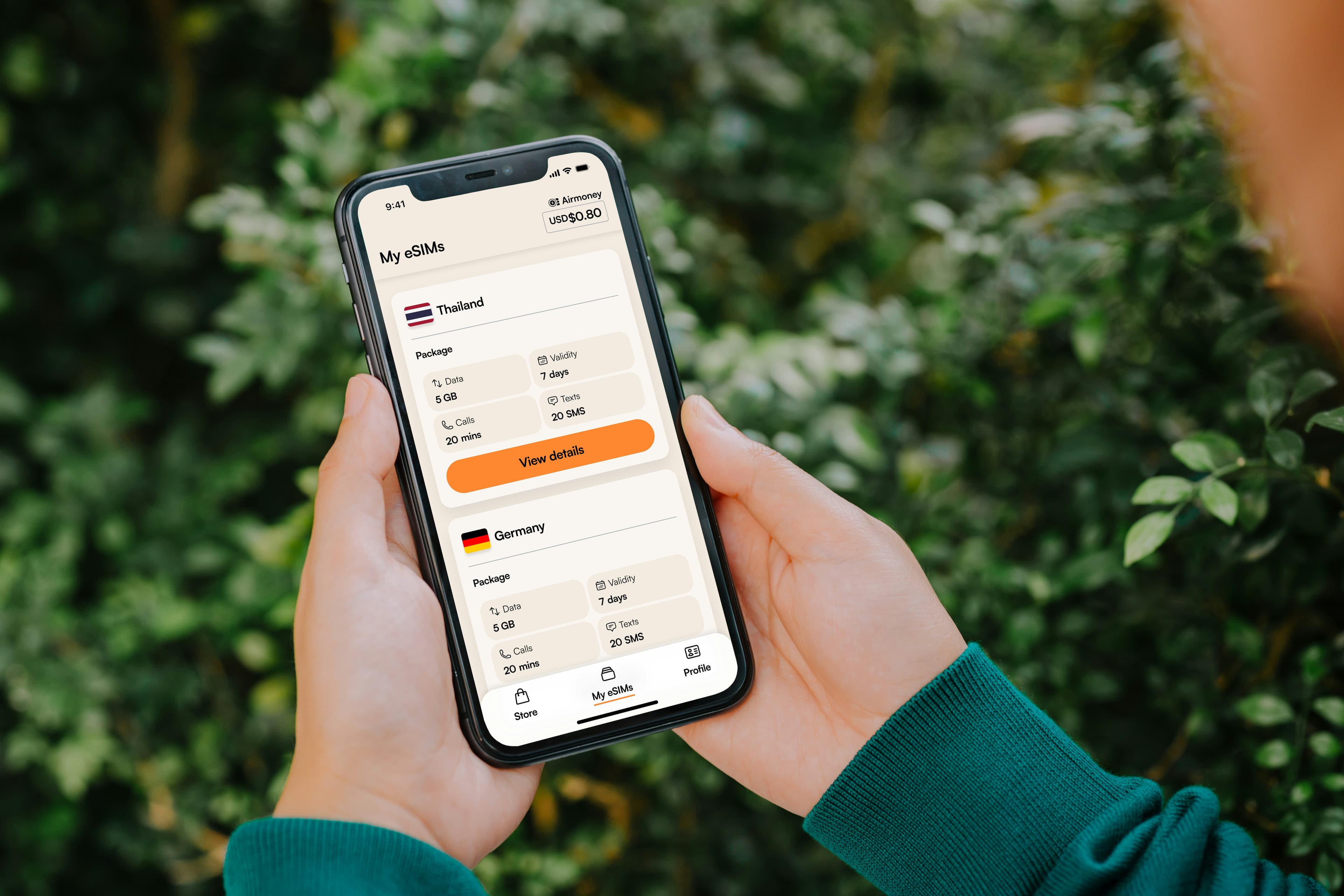

Data-Only eSIM vs eSIM With a Local Number in Bali: Which Should You Choose?
If you are planning a trip to Bali, one of the first practical decisions you will face is how to stay connected once you land. That question sounds simple at first, but there are actually two very different types of eSIM products that travelers commonly use:
- Data-only eSIMs
- eSIMs that include a local Indonesian (+62) phone number
At a glance, both options seem to do the same thing. Both can get you online. Both can help you navigate, message people, and use your phone normally while traveling. Both can work very well for tourists.
But once you look a little deeper, the differences become more meaningful.
A data-only eSIM gives you internet access. That is usually enough for a short trip, especially if you already rely on apps like WhatsApp, Google Maps, Grab, or Gojek. An eSIM with a local number gives you the same internet access, but also adds a local Indonesian phone number, which can help in situations where a business, driver, accommodation host, or app wants to reach you by phone or SMS.
For some travelers, that difference is almost irrelevant.
For others, it can remove friction at exactly the moments when they most need things to be easy: right after landing, while coordinating airport pickup, while checking into a villa, while booking transport, or while dealing with a verification code that refuses to cooperate with a foreign number.
This guide takes a practical, traveler-first approach. Instead of focusing only on technical features or marketing language, it explains what the difference actually means in real life so you can choose the setup that fits the way you travel.
Quick Comparison: Data-Only eSIM vs Local-Number eSIM
| Feature | Data-Only eSIM | eSIM With Local +62 Number |
|---|---|---|
| Mobile data | ✅ | ✅ |
| Google Maps | ✅ | ✅ |
| WhatsApp messaging | ✅ | ✅ |
| Social media | ✅ | ✅ |
| Internet browsing | ✅ | ✅ |
| Local Indonesian phone number | ❌ | ✅ |
| SMS capability | Usually no | Usually yes |
| Local calls | Usually no | Usually yes |
| SMS OTP compatibility | Limited | Better suited |
| Driver and booking contact number | Home number only | Local +62 number available |
| Local coordination flexibility | Moderate | Higher |
| Backup contact method | Limited | Stronger |
The most important thing to understand is that this is not a comparison between “good” and “bad.”
It is a comparison between internet access only and internet access plus local phone functionality.
That difference may sound small, but travel is full of small moments where convenience matters. The right setup is the one that reduces stress, not the one that looks best on paper.
What Data-Only eSIMs Do Well
A data-only eSIM is the simplest form of travel connectivity. You install it on your phone, turn it on, and use it like mobile data from home. There is no physical SIM swap, no need to open your phone, and usually no need to visit a shop or airport kiosk.
The setup is usually very straightforward:
- Purchase the eSIM online
- Scan a QR code or complete a digital installation
- Activate the plan
- Start using mobile data when you arrive
For many travelers, that is exactly what they want: a fast, reliable way to get online without thinking too much about telecom details.
Once activated, a data-only eSIM lets you do almost everything a traveler typically needs:
- Use Google Maps to find your way around
- Message friends and family
- Coordinate through WhatsApp
- Access email
- Browse the web
- Check restaurant hours
- Book rides through apps
- Upload photos and videos
- Use translation tools
- Stay active on social media
If your Bali trip is centered around internet-based communication, a data-only eSIM may be more than enough.
Why It Appeals to So Many Travelers
The biggest advantage of a data-only eSIM is that it keeps things simple. There are fewer moving parts, fewer settings to manage, and fewer questions about whether a local number is necessary.
That simplicity matters more than people often realize. When you are traveling, especially after a long flight, the last thing you want is a complicated setup process or a feature you may never use.
A data-only eSIM is especially attractive if you:
- Want something fast and easy
- Traveling for a short holiday
- Already use apps for nearly everything
- Rarely make traditional phone calls
- Do not often rely on SMS verification
- Want the least amount of setup hassle
For that type of traveler, data-only is not a compromise. It is often the best answer.
Where Data-Only eSIMs Work Best
Data-only eSIMs shine when your entire travel routine is app-based. That describes a lot of people today.
If you already communicate through WhatsApp, navigate through Google Maps, and book rides through apps, then you may never feel the absence of a local number at all. Many travelers go through their entire Bali trip without making a single local phone call.
That is why data-only eSIMs remain so popular. They solve the main problem most tourists have: getting connected immediately and reliably.
They Work Well For:
- Short stays
- Solo travelers with simple plans
- People who already organize everything through apps
- Tourists staying in hotels with a front desk
- Travelers who do not need local verification codes
- People who prefer the most basic and efficient setup possible
A data-only eSIM can be particularly effective if your accommodation is already booked, your transfers are already arranged, and your itinerary is relatively stable. In that case, the eSIM is simply there to provide internet access, not to manage lots of communication.
Where Data-Only eSIMs Can Fall Short
The limitations of a data-only eSIM usually show up not in normal browsing, but in moments of local coordination. That is the key distinction.
When everything happens inside apps, data-only is excellent. But Bali is a place where many parts of travel still happen through a mix of app-based communication, local phone numbers, WhatsApp threads, direct calls, and SMS-based verification.
That is where the extra functionality of a local number starts to matter.
1. Ride-Hailing and Local Transport
Grab and Gojek are central to how many people move around Bali. They are often used for airport pickup alternatives, short trips between neighborhoods, restaurant visits, or longer rides to beaches, villas, and viewpoints.
Foreign numbers often work fine. But not always perfectly.
Travelers sometimes run into issues involving:
- Registration
- SMS verification
- Number acceptance
- Account setup
- Communication with drivers
A local Indonesian number can reduce the number of points where something might fail or become awkward. It does not magically solve every issue, but it gives you a stronger local presence in the app ecosystem.
That can matter a lot if you rely heavily on ride-hailing and want your transport setup to feel smooth from the beginning.
2. Airport Pickups and Arrival Coordination
Your first few hours in Bali are often the most chaotic part of the trip. You may be tired, carrying luggage, adjusting to the heat, looking for your driver, and trying to understand a new environment while your phone is the only tool keeping you oriented.
In that situation, communication matters.
Airport pickups, private drivers, hotel shuttles, and tour transfers are often coordinated through WhatsApp, but sometimes a local number is still useful as a backup. A driver may call directly. A message may not go through immediately. A host may try to reach you through a different channel. If you are still sorting out your data settings or struggling with airport Wi-Fi, having a local number available can remove some of that friction.
It is not about assuming something will go wrong. It is about reducing the pain if something does.
3. Villas, Guesthouses, and Small Property Communication
Large hotels are usually straightforward. They often have front desks, formal booking systems, and clear check-in procedures.
Smaller accommodations can be more personal and more flexible, but also a bit less standardized. That means communication sometimes depends on a direct phone number, local contact, or a WhatsApp thread that is managed informally.
A host may want to:
- Call you directly
- Send an SMS reminder
- Share a gate code
- Send a location pin
- Confirm arrival time
- Reach you through a backup number if your messaging app is delayed
A local number can make these exchanges feel easier and more natural. It is not required in every case, but it can make the process more seamless, especially if you are arriving late or moving between several properties during the same trip.
4. SMS Verification and OTP Codes
One of the most overlooked reasons to consider a local number is SMS verification.
Many apps and online services still use one-time passwords, or OTPs, sent by text message. These may be used for:
क्या आपका फोन eSIM सपोर्ट करता है?
ऑर्डर करने से पहले संगत iPhone और Android की सूची देखें: सिर्फ 30 सेकंड।
संगतता जांचें- Account logins
- Security checks
- Booking confirmations
- App registrations
- Payment verification
- Identity confirmation
A data-only eSIM usually does not give you a local SMS-capable number, so if a service expects one, you may have a harder time completing the process.
That does not mean a local number is required for every app. It simply means that if you know you often get stopped by verification steps while traveling, a local number can be helpful.
The benefit here is less about everyday use and more about “backup usefulness.” Most travelers do not need SMS every hour, but when they do need it, they usually need it immediately.
What a Local-Number eSIM Adds
An eSIM with a local Indonesian number includes everything a data-only eSIM gives you, plus local phone functionality.
That generally means you get:
- Mobile data
- A +62 Indonesian phone number
- SMS capability
- Call capability, depending on the plan
- A local contact number during your stay
The most important thing is not that you will constantly use the local number. Most travelers will not. The value is that it is there when you need it.
That extra layer can be surprisingly useful in travel situations where a business wants to call instead of chat, where an app expects a local text code, or where someone simply wants a local number they can reach without using data-based messaging.
Why a Local Number Feels More Flexible
A local number gives you more ways to solve problems.
If a WhatsApp message goes unanswered, you can still be contacted by phone. If an app requires SMS, you may be able to receive it. If a driver cannot find your location, they may try calling you directly. If a local business prefers phone communication, you are ready.
That kind of flexibility is often invisible until it becomes useful. Then it becomes very useful very quickly.
Real-World Bali Scenarios
Sometimes the difference is easiest to understand when you imagine how a trip actually unfolds.
Scenario 1: Short Holiday, Simple Plans
- You are in Bali for five days.
- You are staying in a hotel.
- You already use WhatsApp for everything.
- Your airport transfer is pre-booked.
- You do not expect to need many local services.
For this traveler, a data-only eSIM is probably enough. It gives you all the online connectivity you need without extra complexity.
Scenario 2: First-Time Visitor With Lots of Movement
- You are arriving in Bali for the first time.
- Your flight lands late.
- You have an airport pickup arranged.
- You will be moving between several places during the trip.
- You plan to use Grab and Gojek a lot.
In this case, a local-number eSIM may be worth it. You are more likely to deal with local coordination, timing changes, and the kinds of small details that become easier when you have a local number available.
Scenario 3: Long-Stay Remote Worker
- You are staying for several weeks or even a month.
- You will be booking activities, ordering transport, coordinating with hosts, and managing daily logistics.
- You may also need verification codes for various accounts.
Here, a local number can become significantly more useful over time. The longer you stay, the more chances there are for phone-based communication to matter.
Scenario 4: Family Travel
- You are traveling with other people.
That means more moving parts, more timing, more bookings, and more chances for confusion.
In that kind of trip, an extra contact method can make a real difference. A local number can help with activity providers, hotel staff, transport arrangements, and last-minute changes.
The larger the group, the more useful backup communication tends to be.
WhatsApp: The Part That Confuses Many Travelers
A lot of travelers worry that changing connectivity means changing their WhatsApp identity. That is usually not how it works.
WhatsApp accounts are tied to the number used when the account was registered. In most cases, using a Bali eSIM does not automatically change your WhatsApp number.
That means you can often:
- Keep your existing WhatsApp account
- Continue messaging with your home-country number
- Use Bali data normally
- Stay reachable while traveling without switching your main messaging identity
This applies whether the eSIM is data-only or includes a local number.
So if your main travel communication happens through WhatsApp, you do not necessarily need a local Indonesian number just to keep the app working. WhatsApp is usually fine as long as your phone has an internet connection.
What changes is the flexibility around local calls, SMS, and contact methods outside WhatsApp.
Is a Local Number Better for Grab and Gojek?
That depends on how much certainty you want. Plenty of people use Grab and Gojek with foreign numbers and never have a problem. Others encounter verification issues, communication delays, or account setup friction. Both experiences are common enough that it is hard to make a one-size-fits-all statement.
If transport apps are a major part of your Bali trip, a local number gives you another way to keep things running smoothly. It may not be essential, but it does give you an extra layer of backup.
That can be especially helpful if:
- You are a first-time visitor
- You are arriving late
- You are traveling with family or a group
- You are staying in several different locations
- You rely on ride-hailing multiple times per day
In other words, the more your trip depends on local movement, the more valuable the extra communication flexibility tends to become.
How to Decide Which One Fits You Best
The best way to choose is to think about your actual travel habits instead of the product features in isolation.
A Data-Only eSIM Is Usually Enough If:
- Want the simplest setup possible
- Your trip is short
- Mainly communicate through WhatsApp
- Rarely use SMS verification
- Staying in hotels or resort-style accommodations
- Comfortable using apps for transportation and bookings
- Want the fastest, least complicated option
For many travelers, this is the perfect fit. It keeps the experience clean and efficient.
A Local-Number eSIM Makes More Sense If:
- Use Grab or Gojek often
- Want a local contact number available
- May need SMS verification during the trip
- You will coordinate with drivers and hosts directly
- Staying longer than a quick holiday
- Expect to deal with more local services and bookings
- Want maximum flexibility if something goes wrong
This is often the better choice for travelers who like being prepared and do not mind paying a little more or setting up a little more functionality in exchange for peace of mind.
What to Think About Before You Buy
A few simple questions can help you decide quickly.
- Will I mostly use WhatsApp for communication?
- Will I need local transportation services often?
- Am I likely to receive OTP codes or verification texts?
- Is this a short break or a longer stay?
- Do I want the easiest possible setup, or more backup options?
If your answers point strongly toward simplicity, a data-only eSIM is probably the right choice.
If your answers point toward more coordination, more movement, and more contact with local people or services, then an eSIM with a local number may be worth the extra flexibility.
There is no universal winner here. The better option is the one that matches your travel style.
Common Misconceptions
It is also worth clearing up a few misunderstandings that often come up in travel discussions.
“I Need a Local Number or I Cannot Use My Phone”
That is not true. A data-only eSIM still allows you to use your phone normally for browsing, messaging, navigation, and most travel tasks.
“A Local Number Means I Will Have to Change WhatsApp”
Usually false. WhatsApp generally remains tied to your registered number.
“Data-Only Means I Cannot Communicate Locally”
Not true. A data-only eSIM still lets you message through apps and handle most communication online.
“A Local Number Is Always Better”
Not necessarily. If your trip is short and simple, a local number may offer benefits you never use.
“The Cheapest Option Is Automatically Best”
Not always. The cheapest option is only best if it actually fits the way you travel.
A Practical Way to Think About It
A helpful way to view the choice is this:
- Data-only eSIM = online access, simple travel, app-based communication
- Local-number eSIM = online access plus more local flexibility and backup communication
If your trip is centered around staying connected digitally, data-only is often enough.
If your trip includes more moving parts, more local coordination, or more chances that phone-based communication might matter, then a local number can be a smart addition.
This is not really about technology. It is about convenience.
FAQ
Is a data-only eSIM enough for Bali?
For many tourists, yes. If you mainly use WhatsApp, maps, social media, email, and web browsing, a data-only eSIM can be completely sufficient.
What is a local-number eSIM?
It is an eSIM that gives you mobile data plus an Indonesian +62 phone number that can be used for calls, texts, and local communication needs.
Can I use Grab and Gojek with a foreign number?
Often yes. But some travelers prefer having a local Indonesian number to reduce potential verification or communication issues.
Will WhatsApp still work if I use a Bali eSIM?
Yes. In most cases, WhatsApp continues to work with your existing registered number as long as you have internet access.
Do I need a local Indonesian number for a short trip?
Not necessarily. Many short-term visitors manage perfectly well with a data-only eSIM.
Is a local number useful if I already have roaming?
It can be. Roaming may give you connectivity, but a local number can still help with local communication, bookings, and verification in ways roaming alone may not cover.
Can I use one eSIM for both data and calls?
Sometimes yes, depending on the provider and the specific plan. Not every eSIM supports both equally, so it is important to check the plan details carefully before buying.
Final Thoughts
When it comes to staying connected in Bali, the best choice is not the one with the most features. It is the one that fits your actual trip.
A data-only eSIM is often the simplest and most practical option. It gives you the internet access most travelers need and keeps setup fast and easy.
An eSIM with a local Indonesian number adds another layer of flexibility. It is not always necessary, but it can make transport, accommodation communication, local bookings, and SMS verification easier to manage.
If your trip is short, light, and mostly app-based, data-only may be exactly right. If your trip is longer, more active, or more dependent on local coordination, a local-number eSIM may be worth the extra convenience.
The real question is not which option is better in general. It is which option will make your Bali trip smoother, simpler, and less stressful from the moment you land.